How to take vitamins the “good way”: What and when to take your supplements
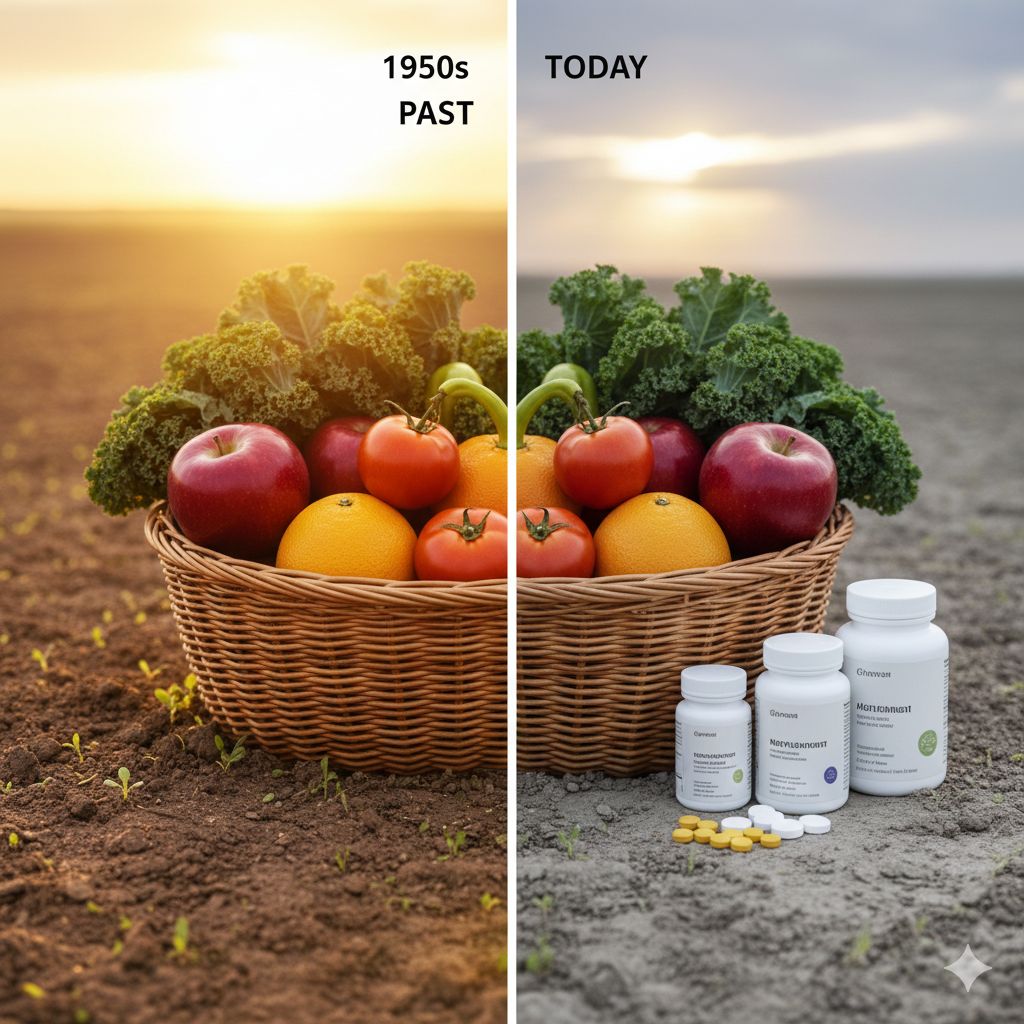
Here's something most people don't realize: the apple your grandmother ate in 1950 had way more vitamins and minerals than the apple you ate yesterday.
Studies comparing USDA food composition data show that fruits and vegetables have lost 5-40% of their mineral content over the past 70 years.
The culprit? Intensive farming depletes soil nutrients. Crops are bred for size and shelf-life instead of nutrition. Add to that our modern lives—less sunshine (vitamin D), more processed food (omega-3s), chronic stress (magnesium), and medications that steal nutrients—and you can see why even people eating "healthy" might need help.
The supplement industry is a $50 billion free-for-all—full of wild claims and products that don't deliver. But buried in the noise, there's solid science. This guide cuts through the confusion to show you which supplements have robust research behind them, who benefits most, and how to use them intelligently.
In this article:
The most evidence-based supplements for general health and longevity
Which supplements more specifically help chronic pain
Supplements for special situations (heart disease, plant-based diets)
What NOT to waste your money on
When to take each supplement for best absorption
A simple starter plan
Part 1: Supplements for general health & longevity (chronic pain or not)
These four supplements have the strongest evidence for supporting overall health, preventing disease, and healthy aging.
#Vitamin D3: Your sunshine vitamin
Imagine vitamin D as a master key that unlocks over 1,000 different doors in your body. It builds strong bones by helping you absorb calcium, trains your immune system to fight infections, lifts your mood (which is why so many people feel down in winter), and yes—it can reduce chronic pain, especially in muscles and bones.
Your cells have vitamin D receptors everywhere—in immune cells, bone tissue, blood vessels, and brain cells. Low levels are linked to chronic pain, heart disease, weak immunity, and faster aging.
What the research shows: Scientists studied 68 people with chronic low back pain who had low vitamin D levels (averaging 12.8 ng/mL, which is well below normal) [1]. After eight weeks of supplementation, something remarkable happened: their pain scores dropped from 81 out of 100 down to 36 at six months. That's a 55% reduction in pain. Their ability to function in daily life improved dramatically too.
But here's the important nuance: when researchers looked at ten different studies together, they found vitamin D supplementation only helped when people were actually deficient [2]. If your levels are already normal, taking more vitamin D won't magically reduce pain. Another large study followed over 21,000 older adults for five years—those with normal vitamin D levels who took supplements saw no pain improvements.
Signs of low vitamin D:
Tired all the time, even after sleeping
Achy bones or muscles for no clear reason
Getting every cold and flu that goes around
Feeling down or blue (especially in winter)
Chronic pain that won't quit
Getting it naturally: Your skin makes vitamin D from sunlight : you need about 10-15 minutes of midday sun on your arms and legs, a few times weekly. But this depends on where you live, your skin color, and the season. Winter sun in most of North America doesn't produce vitamin D.
Food sources: Fatty fish like salmon , egg yolks, fortified milk . But, you'd need to drink 10-20 glasses of milk daily to get recommended amounts!
How to supplement:
Dose: 1,000-4,000 IU daily
Form: Vitamin D3 (cholecalciferol) is much more potent than D2
Timing: Morning with breakfast
Take with: Fat-containing food (eggs, avocado, nuts, butter) because fat increases absorption by about 50% or in oil form
Most people in Canada (for example) should take Vit D supplements all winter every year!
~
#Omega-3 fatty acids: anti-inflammation medicine
Think of inflammation as a fire in your body. A little is good, it helps fight infections and heal injuries. But chronic inflammation is like a fire that never goes out, damaging everything in its path. Omega-3s are the fire extinguisher.
Here's how they work: Your body produces inflammatory chemicals from fats you eat. Omega-3s block the production of these inflammatory chemicals and instead create anti-inflammatory compounds called resolvins, protectins, and maresins. These specialized molecules actively calm inflammation and help tissues heal.
What the research shows: Scientists analyzed multiple studies of people with rheumatoid arthritis, which is a painful inflammatory condition. Those taking omega-3 supplements needed significantly fewer pain medications. In fact, all five studies that tracked pain medication use showed the same thing: people could reduce or even stop their NSAIDs (like ibuprofen) after taking omega-3s [3].
For migraines, researchers compared 40 different studies involving over 6,600 people [4]. High-dose omega-3s (EPA and DHA) worked better than any other preventive treatment—better than medications, better than other supplements. Another recent study showed that 2,000 mg of EPA daily significantly reduced migraine days and improved quality of life in people with chronic migraines [5].
These aren't small effects. We're talking about meaningful pain reduction that allows people to use fewer medications.
Signs of low omega-3:
Dry, rough skin
Stiff, painful joints
Brain fog or trouble concentrating
Always feeling cold
Depression or mood swings
Food sources: Fatty fish 2-3 times weekly is the gold standard: salmon (2,200 mg per serving), mackerel, sardines, anchovies, herring. Plant sources like flaxseed, chia seeds, and walnuts contain a different type of omega-3 (ALA) that your body has to convert to the forms you need, but it only converts about 5%, so plants alone aren't sufficient.
How to supplement:
Dose: 2,000-3,000 mg EPA+DHA combined daily
Important: Check the label for actual EPA+DHA content, a "1,000 mg fish oil" capsule typically contains only 300 mg of the omega-3s you need
Timing: With meals (prevents fishy burps 🐟 and improves absorption)
Storage: Keep in fridge or freezer to prevent rancidity
Quality matters: Look for third-party testing for mercury and other contaminants
~
#Magnesium: muscle relaxer & sleep aid
Magnesium is the "relaxation mineral"—involved in over 300 body processes. It relaxes tense muscles, calms your nervous system, blocks pain signals in the brain, and helps you fall asleep and stay asleep.
The American Academy of Neurology reviewed all the evidence and officially recommends magnesium for migraine prevention, typically at 600 mg daily [6]. That's a strong endorsement from neurologists.
Signs of deficiency:
Muscle cramps, especially at night
Eyelid twitches
Can't fall asleep or stay asleep
Feeling anxious or "wired"
Constipation
Frequent headaches
Food sources: Dark leafy greens (spinach), pumpkin seeds, almonds, black beans, dark chocolate, whole grains. The problem: modern farming has depleted soil magnesium by up to 30%. Stress, coffee, and alcohol also drain your stores.
How to supplement:
Dose: 400 mg daily for adults
Best forms: Glycinate (best for sleep), Citrate (helps constipation), Malate (good for energy)
Avoid: Oxide (only 4% absorbed, so basically useless)
Timing: Before bed (promotes relaxation and sleep)
Starting out: Begin with 200 mg, increase slowly to avoid diarrhea
Try for 3-4 months and reassess. Generally no blood work needed unless you have kidney disease or feel no improvement.
~
#Creatine: for aging muscle & brain protector
Creatine is often associated with bodybuilders, but research increasingly shows it's valuable for aging adults. It's a backup energy source for cells, particularly important for tissues with high energy demands like muscles and brain.
What the research shows: Scientists analyzed multiple studies examining memory in healthy people taking creatine versus placebo [7]. Overall, creatine improved memory. But here's what's fascinating: the effect was dramatically different depending on age.
Older adults aged 66-76 showed substantial memory improvements. Younger adults aged 11-31? Essentially no benefit. Another comprehensive review of 16 studies confirmed these cognitive benefits, showing improvements in memory, attention, and how fast people could process information [8].
Why? Creatine powers up brain cells by increasing their energy supply. It boosts ATP (cellular fuel) and supports the brain chemicals involved in forming and consolidating memories.
For muscles, the evidence is equally strong. Multiple studies show creatine supplementation increases muscle mass and strength in aging adults, reduces the risk of falls, and may even help maintain bone density.
Who benefits most:
Adults over 65 (prevents age-related muscle loss)
Vegetarians (no dietary creatine from meat)
Anyone experiencing memory or concentration issues
People with low muscle mass or strength
Those at risk for falls
Food sources: Red meat and fish contain creatine, but you'd need several pounds daily to match supplement doses. Cooking destroys much of the creatine content.
How to supplement:
Dose: 5 grams daily (one teaspoon)
Form: Creatine monohydrate (most studied, effective, and cheapest)
Timing: Anytime—timing doesn't matter for health benefits
No need for: "Loading phases" or cycling on/off
Expected results: Muscle and strength benefits show up in 4-6 weeks. Memory and cognitive benefits take 6-8 weeks.
Part 2: Supplements to target specifically with chronic pain
Living with chronic pain affects everything—mood, sleep, relationships, work, and quality of life. Supplements aren't a cure, but evidence shows several can meaningfully reduce pain.
Vitamin D, Omega-3, and Magnesium (detailed above) form the foundation of pain management through supplementation. They work through different mechanisms:
Vitamin D: Reduces pain when deficient, modulates immune system
Omega-3: Blocks inflammatory chemicals, creates anti-inflammatory compounds
Magnesium: Blocks pain signals in the brain, relaxes muscles
For chronic pain specifically: Studies show consistent supplementation for 3-6 months produces the best results. This isn't a quick fix. It takes time to build up tissue levels and calm chronic inflammation.
#B Vitamins: nerve protectors and migraine preventers
B vitamins repair and protect your nerves, support energy production, and play crucial roles in pain management. Different B vitamins work in different ways.
B12 (Cobalamin): For nerve Pain
B12 helps build and maintain the protective coating around nerves (called myelin)—think of nerves like electrical wires that need insulation to work properly. It also helps damaged nerves regenerate and reduces abnormal nerve firing that causes burning, tingling, and shooting pain.
What the research shows: Multiple studies examining B vitamins for nerve pain found moderate to strong evidence that B12 helps [9]. People with diabetic nerve pain, post-shingles nerve pain, and other types of neuropathy experienced meaningful pain reduction with B12 supplementation.
High-risk groups for B12 deficiency:
Vegetarians and vegans (B12 only exists in animal products)
Anyone over 50 (stomach acid decreases with age)
People taking antacids or proton pump inhibitors
People taking metformin (diabetes medication)
Anyone with digestive disorders
Signs of B12 deficiency:
Tingling or numbness in hands/feet
Feeling "off balance" when walking
Extreme tiredness that sleep doesn't fix
Brain fog or memory problems
Smooth, sore tongue
Nerve pain (burning, shooting, electric sensations)
Food sources: B12 exists ONLY in animal products—meat, fish, eggs, dairy. Vegetarians and vegans must supplement.
B2 (Riboflavin): For Migraines
Riboflavin plays a critical role in cellular energy production, particularly in brain cells. Many migraine sufferers have impaired energy metabolism in their brain cells. B2 helps correct this by supporting the mitochondria—the power plants inside cells.
What the research shows: Multiple studies have shown that high-dose B2 (400 mg daily) reduces migraine frequency and severity. In one well-designed study, people taking 400 mg of riboflavin daily for three months experienced significant reductions in migraine attacks—about 50% fewer migraines per month. The American Academy of Neurology and the American Headache Society give B2 a "Level B" recommendation for migraine prevention, meaning there's good evidence it works.
B2 works differently than medications—it takes time to build up and show effects, usually 2-3 months. But it's safe, inexpensive, and can be used alongside other migraine treatments.
Signs you might benefit from B2:
Frequent migraines (3+ per month)
Migraines that don't respond well to medications
Want a preventive approach with minimal side effects
Have tried other preventive treatments without success
Food sources: Milk, eggs, lean meats, green vegetables, fortified cereals. However, you'd need to drink about 8-10 glasses of milk daily to reach the therapeutic dose for migraines.
How to supplement for B vitamins:
For nerve pain (B12):
Dose: 1,000 mcg (1 mg) daily
Form: Methylcobalamin
For migraines (B2):
Dose: 400 mg daily
Form: Riboflavin (plain B2)
Timing: Morning, with or without food
Side effect: May turn urine bright yellow (completely harmless)
Important: Takes 2-3 months to see full effect
B-Complex option: If you have both nerve pain and migraines, or want comprehensive B vitamin support, you can take a high-quality B-complex supplement that includes:
B12: 1,000 mcg
B2: 400 mg
B6: 50-100 mg (never exceed 200 mg—higher doses can cause nerve damage)
Other B vitamins in balanced amounts
Try for 3-4 months and reassess. Consider checking B12 levels with your provider if you have risk factors for deficiency.
~
#Vitamin C: the tissue repair agent
Vitamin C builds and repairs tissues throughout your body. It makes collagen, aka the structural protein that holds skin, bones, tendons, and blood vessels together. When tissues are damaged by injury or chronic inflammation, you need collagen to repair them.
What the research shows: Researchers studied people undergoing foot or ankle surgery (which can trigger a devastating chronic pain condition called Complex Regional Pain Syndrome) [10]. Those who took 500 mg of vitamin C daily for 50 days had one-fifth the risk of developing this chronic pain condition. That's an 80% reduction in risk—remarkable for such a simple, safe intervention.
Signs of deficiency: Severe deficiency (scurvy) is rare. Mild deficiency causes: bleeding gums, easy bruising, slow-healing wounds, frequent infections, fatigue.
Food sources: Red bell pepper (190 mg), orange (70 mg), strawberries (90 mg per cup), broccoli (80 mg per cup), kiwi (70 mg). Most people eating fruits and vegetables get adequate amounts from food.
How to supplement:
Dose: 500-1,000 mg daily
Best absorption: Split dose (500 mg twice daily) absorbs better than 1,000 mg once
Timing: Anytime, with (best if stomach issues) or without food
Very safe: Excess is excreted in urine
Side effects: Over 2,000 mg daily may cause diarrhea.
Part 3: Supplements for other specific situations
CoQ10: For heart health and statin users
CoQ10 is the spark plug in every cell, especially abundant in heart muscle. It produces ATP (cellular fuel) and acts as a powerful antioxidant. Critical fact: Statin medications deplete CoQ10. The same biochemical pathway that makes cholesterol makes CoQ10.
What the research shows: In a two-year study of 420 people with moderate to severe heart failure, researchers compared those taking CoQ10 (300 mg daily) alongside their regular heart medications versus those taking placebo [11]. The results were striking:
43% fewer cardiovascular deaths (9% vs 16%)
42% fewer deaths from any cause (10% vs 18%)
43% fewer major heart problems (15% vs 26%)
Fewer hospitalizations for heart failure (8% vs 14%)
These are substantial, clinically meaningful improvements in people with serious heart disease.
Signs you might benefit:
Taking statin medications
Heart failure or heart disease
Constant fatigue despite adequate rest
Muscle pain (especially with statins)
Over 40 (levels decline with age)
Food sources: Organ meats (heart, liver), beef, sardines, spinach. You cannot get therapeutic amounts from food alone.
How to supplement:
Dose: 100-200 mg daily
Form is critical: Ubiquinol (the "reduced" form) absorbs much better than ubiquinone, especially for older adults
Timing: With fatty meals (absorption increases significantly)
Dosing strategy: Split dose—100 mg twice daily works better than 200 mg once
Try for 3-4 months and reassess. Discuss with your provider or cardiologist, particularly if you have heart failure.
~
Iron: For plant-based diets and heavy periods
Iron carries oxygen throughout your body. It makes hemoglobin (the oxygen-carrying protein in blood), provides energy to every cell, keeps you warm, and helps your brain function.
Who's at risk:
Women with heavy periods
Pregnant women
Frequent blood donors
Vegetarians and vegans
Endurance athletes
Signs of deficiency:
Exhausted no matter how much you sleep
Pale skin (check inside lower eyelids)
Shortness of breath
Always cold—especially hands and feet
Craving ice or weird things like dirt
Restless legs at night
What the research shows: Scientists discovered something counterintuitive about iron absorption [13]. They gave iron-deficient women either 60 mg daily or 120 mg every other day. The every-other-day group absorbed 22% of their dose compared to only 16% in the daily group. Over two weeks, total absorption was actually higher with every-other-day dosing (175 mg vs 131 mg absorbed).
Why? Daily iron supplementation triggers a hormone called hepcidin that blocks iron absorption for 24 hours. Giving your body a day off resets this response. Bonus: every-other-day dosing causes fewer side effects like nausea and constipation.
Food sources:
Heme iron (better absorbed): Red meat, chicken (dark meat), fish
Non-heme iron (less absorbed): Beans, lentils, spinach, fortified cereals, tofu
Absorption tip: Vitamin C triples non-heme iron absorption—pair plant sources with citrus, peppers, or tomatoes
How to supplement:
-Ferrous Sulfate: Most common, affordable, but causes significant constipation, nausea, dark stools; needs stomach acid for absorption.
- Ferrous Gluconate: Gentler than sulfate, but lower elemental iron content.
- Ferrous Fumarate: Higher iron content than sulfate but similar side effect profile.
- Ferrous Bisglycinate (Chelated): Iron bound to glycine, improving absorption and significantly reducing GI side effects like constipation.
Best schedule: Every OTHER day (doubles absorption)
Take with: Vitamin C (500 mg or orange juice)
Best timing: Empty stomach if tolerated; otherwise with small snack
Never take with: Coffee, tea, milk, antacids, calcium, zinc—all block absorption
Normal: Black stool (harmless)
Can happen : Constipation (every other day make it easier)
Expected results: Hemoglobin should increase within 2 weeks.
Try for 3-4 months and reassess. Check CBC and ferritin levels before starting and at 8 weeks. (Talk to a doctor or pharmacist to find the best form for your deficiency and tolerance.
Part 4: What NOT to waste your money on
** General multivitamins
Research tracking nearly 400,000 people over 20+ years found no evidence that multivitamins improved longevity in healthy adults [14]. In fact, daily users had a 4% higher risk of death (though this doesn't prove cause and effect).
The problem: Multivitamins provide small amounts of many nutrients but therapeutic amounts of nothing. Nutrients compete for absorption. If you're not deficient, adding more doesn't help, sometimes it harms.
Better approach: Target specific nutrients you're actually missing rather than taking a shotgun approach.**
**High-dose antioxidants
Research on high-dose vitamin E (400+ IU) and beta-carotene (especially in smokers) showed no benefits and potential harms. Some studies found increased mortality.
Why? Exercise creates free radicals that signal beneficial adaptations. Excessive antioxidants may block these health-promoting signals.
** Emerging "longevity" supplements
NMN and nicotinamide riboside have theoretical mechanisms involving cellular energy, but they lack sufficient human clinical trials showing actual health benefits. Animal studies look promising, but we're not mice. Save your money until human data catches up.
Part 5: When to take what
Keep separate:
Iron from calcium, zinc, magnesium, coffee, tea (all block absorption)
Magnesium from calcium and iron (2 hours apart)
| Time | Supplements | Why |
|---|---|---|
| Morning with breakfast | Vitamin D3, Omega-3, CoQ10, B-Complex (B2, B12) | Need dietary fat for absorption (D3, Omega-3, CoQ10); B vitamins energize |
| Anytime | Creatine, Vitamin C | Timing doesn't significantly affect benefit |
| Before bed | Magnesium glycinate | Promotes relaxation and sleep quality |
| Every other day with vitamin C | Iron (away from calcium, magnesium, zinc) | Alternate-day dosing doubles absorption; vitamin C enhances uptake |
| Supplement | Expected Timeline |
|---|---|
| Iron, B12 | 2-4 weeks |
| Vitamin D | 4-8 weeks |
| Magnesium | 2-6 weeks |
| B2 (for migraines) | 2-3 months |
| Omega-3, Creatine | 4-12 weeks |
| Chronic pain relief | 3-6 months |
Conclusion
We're no longer getting the nutrients our grandparents got from food. Depleted soils, extended storage times, and modern lifestyles have created nutritional gaps that even healthy eating can't always fill.
Food comes first, always. But recognize when supplementation makes sense. Pay attention to timing—fat-soluble vitamins with fatty meals, magnesium at night, iron separately. Form matters: vitamin D3 not D2, magnesium glycinate not oxide, ubiquinol not ubiquinone for heart conditions.
Give supplements adequate time—most benefits take weeks to months. Skip general multivitamins and target actual needs. For chronic pain, start with vitamin D, omega-3, and magnesium. For migraines, add B2 and magnesium. For healthy aging or myofascial pain, consider adding creatine for brain health and muscle strength.
Evidence-based supplementation can increase energy, reduce inflammation and pain, strengthen immunity, protect heart and brain function, and support healthy aging.
Start simple, track results, adjust based on response. Remember—supplements support a healthy life; they don't create one. Nutritious food, regular movement, quality sleep, and meaningful relationships remain the foundation.
References
[1] Ghai B, Bansal D, Kanukula R, et al. Vitamin D supplementation in patients with chronic low back pain: An open label, single arm clinical trial. Pain Physician. 2017;20(1):E99-E105.
[2] Lee TJ, Tsai RY, Ho CC, et al. Updated meta-analysis reveals limited efficacy of vitamin D supplementation in chronic low back pain. In Vivo. 2024;38(6):2955-2967.
[3] Lee YH, Bae SC, Song GG. Omega-3 polyunsaturated fatty acids and the treatment of rheumatoid arthritis: a meta-analysis. Arch Med Res. 2012;43(5):356-362.
[4] Wang X, et al. Network meta-analysis of migraine prophylaxis interventions. Headache. 2024;64(3):245-258.
[5] Chen Y, et al. EPA supplementation in chronic migraine: randomized controlled trial. Cephalalgia. 2025;45(2):156-165.
[6] Silberstein SD, Holland S, Freitag F, et al. Evidence-based guideline update: magnesium for migraine prevention. Neurology. 2012;78(17):1346-1353.
[7] Prokopidis K, Giannos P, Triantafyllidis KK, et al. Effects of creatine supplementation on memory in healthy individuals: systematic review and meta-analysis. Nutr Rev. 2023;81(4):416-427.
[8] Xu C, Bi S, Zhang W, Luo L. The effects of creatine supplementation on cognitive function in adults: systematic review and meta-analysis. Front Nutr. 2024;11:1424972.
[9] Julian T, Syeed R, Glascow N, et al. B vitamins for neuropathic pain: systematic review and meta-analysis. Nutrients. 2020;12(8):2351.
[10] Chen Y, Zhan C, Liu Y, et al. Vitamin C and pain management: underlying mechanisms. Front Pharmacol. 2021;12:732909.
[11] Mortensen SA, Rosenfeldt F, Kumar A, et al. The effect of coenzyme Q10 on morbidity and mortality in chronic heart failure: results from Q-SYMBIO. JACC Heart Fail. 2014;2(6):641-649.
[12] Pawlak R, Parrott SJ, Raj S, et al. How prevalent is vitamin B12 deficiency among vegetarians? Eur J Clin Nutr. 2014;68(5):541-548.
[13] Stoffel NU, Cercamondi CI, Brittenham G, et al. Iron absorption from oral iron supplements given on consecutive versus alternate days in iron-deficient women. Haematologica. 2020;105(8):2126-2134.
[14] Chen F, Du M, Blumberg JB, et al. Multivitamin use and mortality risk in 3 prospective US cohorts. JAMA Netw Open. 2024;7(6):e2418729.
Disclaimer: This is educational information, not medical advice. Consult healthcare providers before starting new supplements, especially with existing health conditions or medications.
